The Designer and Data Editor roles
SQL Spreads has two roles. The Designer role connects Excel documents to SQL Server and decides which tables, columns and rows each document can update. The Data Editor role updates data in those documents, with all Design features locked, so the setup stays exactly as the Designer made it. A Designer can also update data.
In the Data Editor role, all SQL Spreads Design features are grayed out and locked, and the user can only change SQL Server data in SQL Spreads documents created by a user in the Designer role.
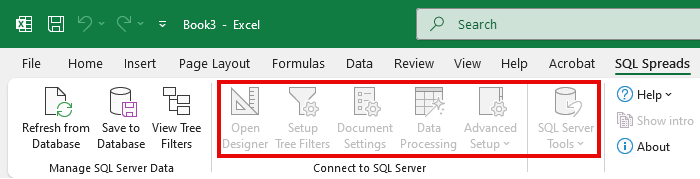
The idea behind the Designer and Data Editor roles is that you should let a person with database knowledge create Excel spreadsheets for data maintenance, and then let your non-database skilled people use those data management Excel spreadsheets to manage the data.
What the Designer decides
- Which columns are shown, and which are read-only: Setting up your columns
- Whether rows can be inserted or deleted, per table: Choose whether users can insert, update or delete rows
- Which rows load into Excel, and for which user: Filtering rows and Row-wise user access
- Turning on change tracking, which records who changed each row and when: Tracking changes (Pro and above)
- A warning when someone else changed the same row: Conflict detection (Premium and above)
- Building against a test database and moving the finished document to production: Switching to another server, database or table

How to give a user the Data Editor role
The role comes from the license key. Each person who updates data in a Designer's documents needs a Data Editor license, which you can buy on the pricing page. For help choosing licenses for your team, contact sales@sqlspreads.com.